Talent Supply Chain Systems
Systems Thinking | Platform Design | Service Design | Multi-Stakeholders Systems | Scenario Modeling | Research-Driven Design
This project explores complex supply–demand systems using systems thinking and service design, translating system-level insights into a platform-based solution to improve coordination, decision-making, and overall system performance. (with key elements under consideration for patent)
Talent Supply Chain System
This project explores complex supply–demand systems using systems thinking and service design, translating system-level insights into a platform-based solution to improve coordination, decision-making, and overall system performance. (with key elements under consideration for patent)
Systems Thinking | Platform Design | Service Design | Multi-Stakeholders Systems | Scenario Modeling | Research- Driven Design
Overview
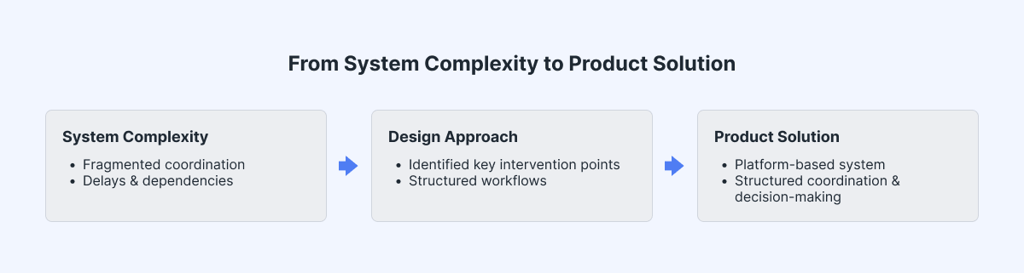
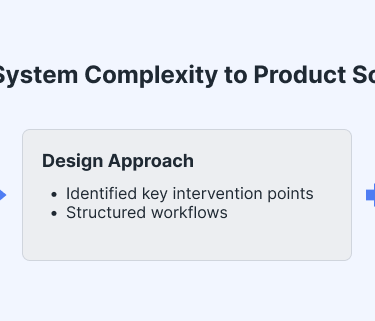
This work explores supply–demand ecosystems as complex, multi-stakeholder systems. By combining systems thinking and service design, I analyzed how interdependencies, delays, and feedback loops shape system behavior—and how these can be improved through structured, platform-based interventions.
Overview
This work explores supply–demand ecosystems as complex, multi-stakeholder systems. By combining systems thinking and service design, I analyzed how interdependencies, delays, and feedback loops shape system behavior—and how these can be improved through structured, platform-based interventions.
The Problem
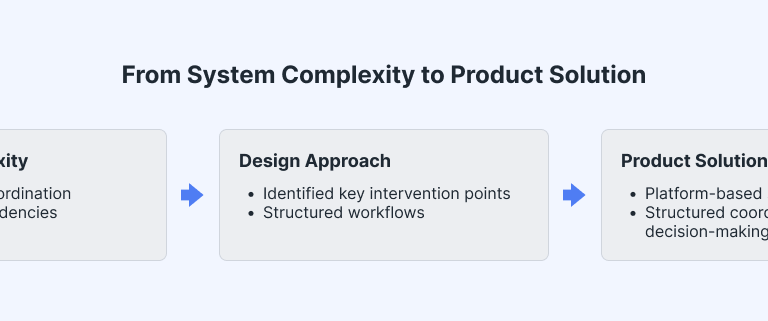
Inefficiencies in supply–demand systems often arise not from isolated issues, but from fragmented coordination and hidden interdependencies across stakeholders.
Decisions made in one part of the system frequently create unintended consequences elsewhere, leading to delays, misalignment, and poor visibility into overall system performance.
The Problem
Inefficiencies in supply–demand systems often arise not from isolated issues, but from fragmented coordination and hidden interdependencies across stakeholders.
Decisions made in one part of the system frequently create unintended consequences elsewhere, leading to delays, misalignment, and poor visibility into overall system performance.
Systems Research & Mapping
To understand the system holistically, I modeled it as an interconnected ecosystem:
Developed causal loop diagrams to map reinforcing and balancing feedback loops
Identified delays, bottlenecks, and unintended consequences
Analyzed how local decisions propagate and influence overall system behavior
This shifted the focus from isolated issues to understanding system-level patterns and dynamics.
Systems Research & Mapping
To understand the system holistically, I modeled it as an interconnected ecosystem:
Developed causal loop diagrams to map reinforcing and balancing feedback loops
Identified delays, bottlenecks, and unintended consequences
Analyzed how local decisions propagate and influence overall system behavior
This shifted the focus from isolated issues to understanding system-level patterns and dynamics.
Identifying Leverage Points
To move beyond surface-level improvements, I focused on identifying high-impact intervention points within the system. This approach was informed by systems thinking frameworks for leverage analysis, helping evaluate how changes at different levels influence overall system behavior.
Evaluated potential intervention areas based on impact vs effort
Identified opportunities to improve coordination, information flow, and decision-making
Prioritized interventions that could influence system behavior without adding operational complexity
This step translated system analysis into clear design direction.
Identifying Leverage Points
To move beyond surface-level improvements, I focused on identifying high-impact intervention points within the system. This approach was informed by systems thinking frameworks for leverage analysis, helping evaluate how changes at different levels influence overall system behavior.
Evaluated potential intervention areas based on impact vs effort
Identified opportunities to improve coordination, information flow, and decision-making
Prioritized interventions that could influence system behavior without adding operational complexity
This step translated system analysis into clear design direction.
Service Design & Product Thinking
Building on these insights, I translated system-level understanding into a product-driven approach:
Conducted stakeholder analysis and defined key personas
Designed a software platform concept to improve coordination and information flow
Created conceptual product interfaces to support decision-making and service delivery (key elements under consideration for patent)
Translated system insights into structured workflows and product features that support real-world decision-making
Service Design & Product Thinking
Building on these insights, I translated system-level understanding into a product-driven approach:
Conducted stakeholder analysis and defined key personas
Designed a software platform concept to improve coordination and information flow
Created conceptual product interfaces to support decision-making and service delivery (key elements under consideration for patent)
Translated system insights into structured workflows and product features that support real-world decision-making
The Solution
The proposed platform is designed to:
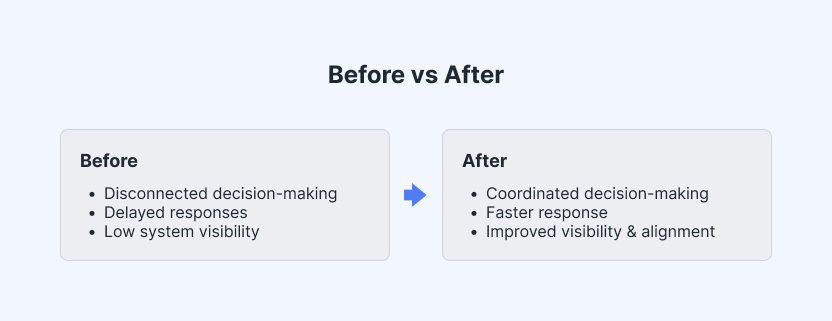
Enable coordinated decision-making across stakeholders
Improve visibility into system dynamics and interdependencies
Reduce inefficiencies through structured workflows
Support better alignment between supply and demand
The goal is not just to solve isolated problems, but to improve how the system behaves over time.
The Solution
The proposed platform is designed to:
Enable coordinated decision-making across stakeholders
Improve visibility into system dynamics and interdependencies
Reduce inefficiencies through structured workflows
Support better alignment between supply and demand
The goal is not just to solve isolated problems, but to improve how the system behaves over time.
Future Direction
This work is being extended through:
System dynamics simulation to test intervention scenarios
Exploration of digital twin modeling for predictive analysis
Scenario-based planning for demand-supply balancing and system resilience
Future Direction
This work is being extended through:
System dynamics simulation to test intervention scenarios
Exploration of digital twin modeling for predictive analysis
Scenario-based planning for demand-supply balancing and system resilience
Key Takeaways
Applied systems thinking to a complex, multi-stakeholder platform problem
Translated system behavior into structured workflows and product concepts
Identified high-impact intervention points to influence system outcomes
Strengthened ability to design scalable, resilient, and data-driven platforms
Key Takeaways
Applied systems thinking to a complex, multi-stakeholder platform problem
Translated system behavior into structured workflows and product concepts
Identified high-impact intervention points to influence system outcomes
Strengthened ability to design scalable, resilient, and data-driven platforms
Skills Applied
Systems Thinking • Service Design • Product Thinking • Platform Design • Stakeholder Mapping • Information Architecture • Scenario Modeling • Digital Twin Concepts
Skills Applied
Systems Thinking • Service Design • Product Thinking • Platform Design • Stakeholder Mapping • Information Architecture • Scenario Modeling • Digital Twin Concepts